
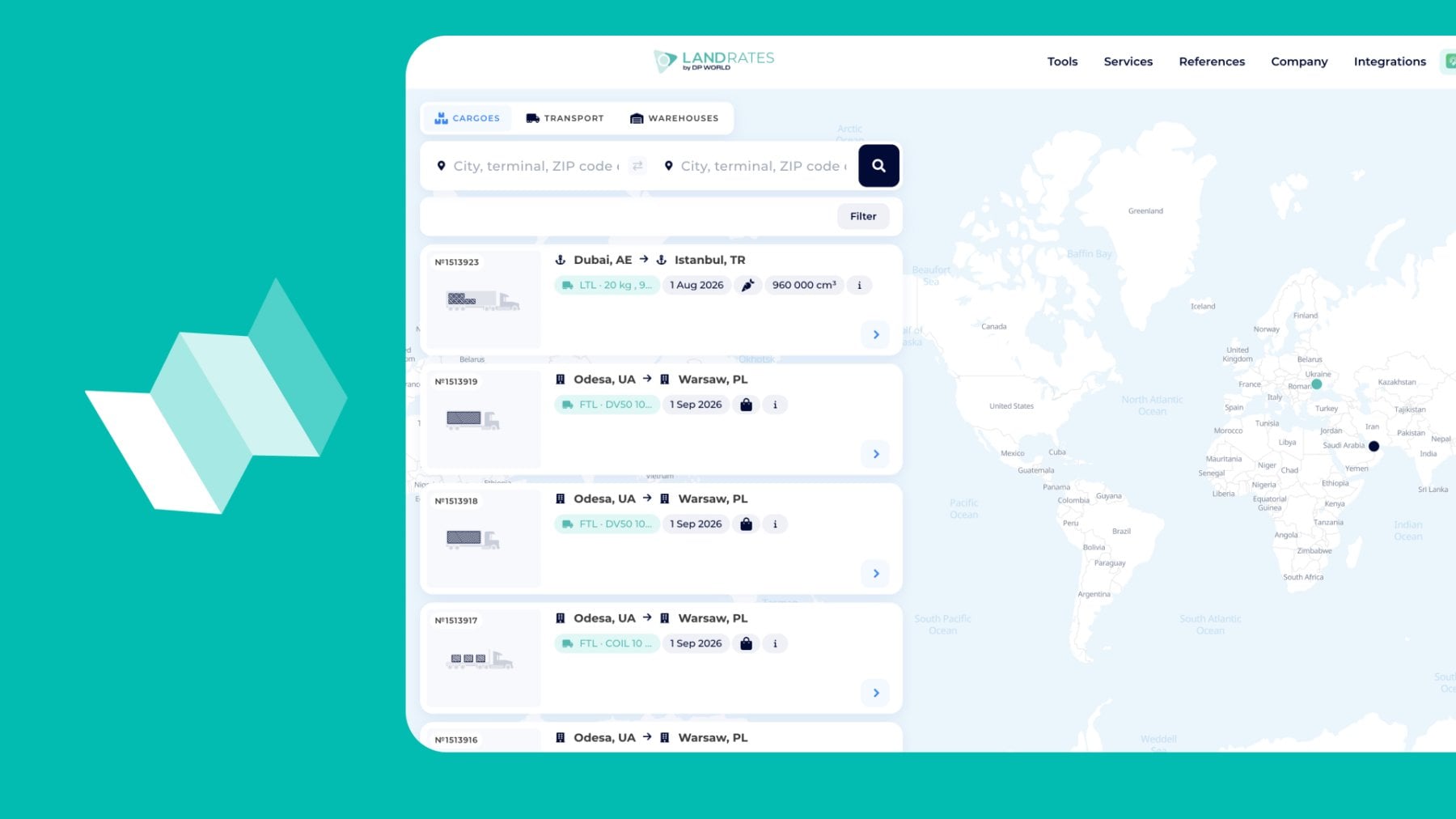
Urgent shipments from shippers, nonstandard cargo requirements, and carriers looking for profitable loads — what unites all of this? The Logistics Map is the platform for this bidirectional land logistics cycle.
With the Cargoes tab in LandRates Logistics Map, shippers get a tender-style marketplace to place cargo requests and collect tailored offers. Carriers, freight forwarders, and logistics providers get access to targeted leads they can quote directly from their Virtual Office.
Let’s explore how the Cargoes tab helps both sides streamline land shipping.
Overview of the “Cargoes” tab
The Logistics Map tool works with three connected logistics layers:
- Cargoes — active shipping requests and cargo leads.
- Transport — available transport services and capacity.
- Warehouses — storage, fulfillment, bonded, and facility services.
The Cargoes tab adapts to your role, whether you are placing a cargo request or quoting one.
You can work in two views:
- Map view — best for route geography, clusters, and visual search.
- Table view — best for comparing many requests by route, shipping type, category, services, and ready-to-load date.
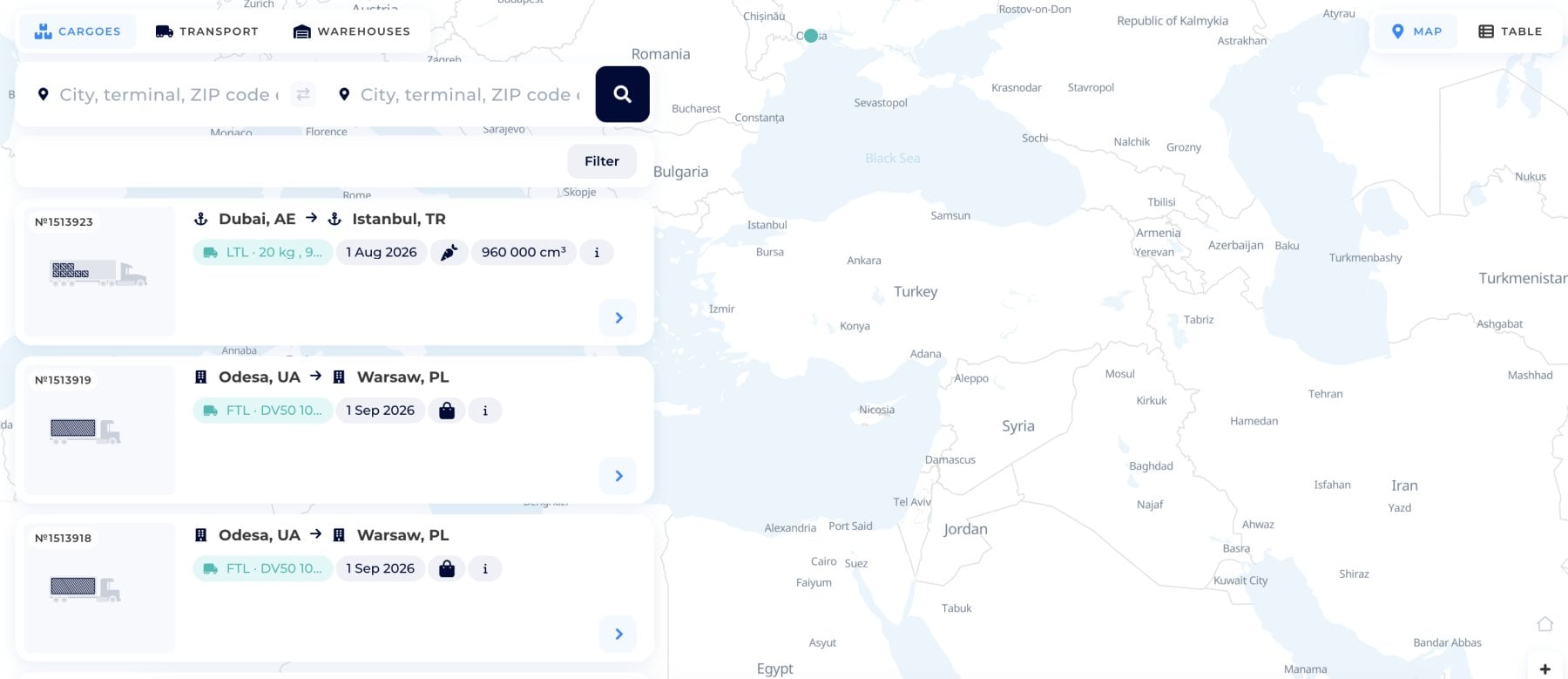
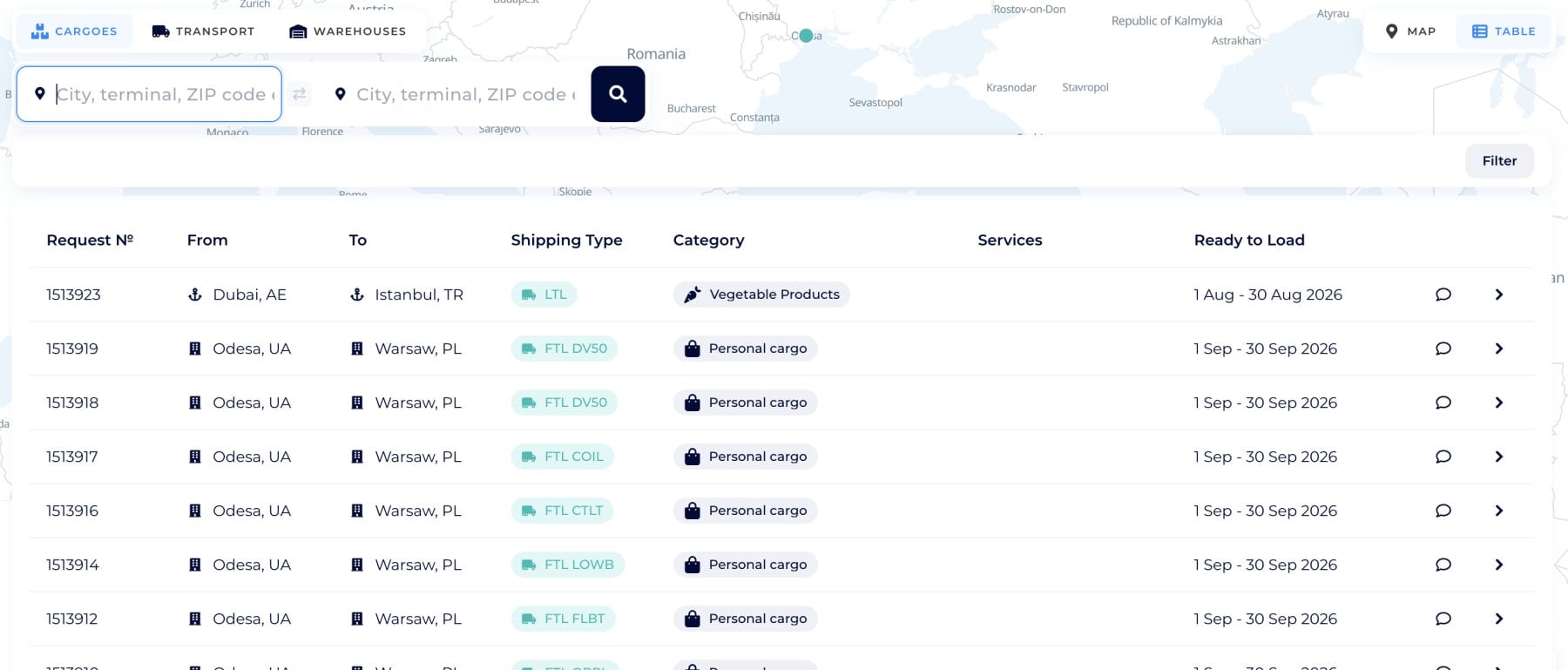
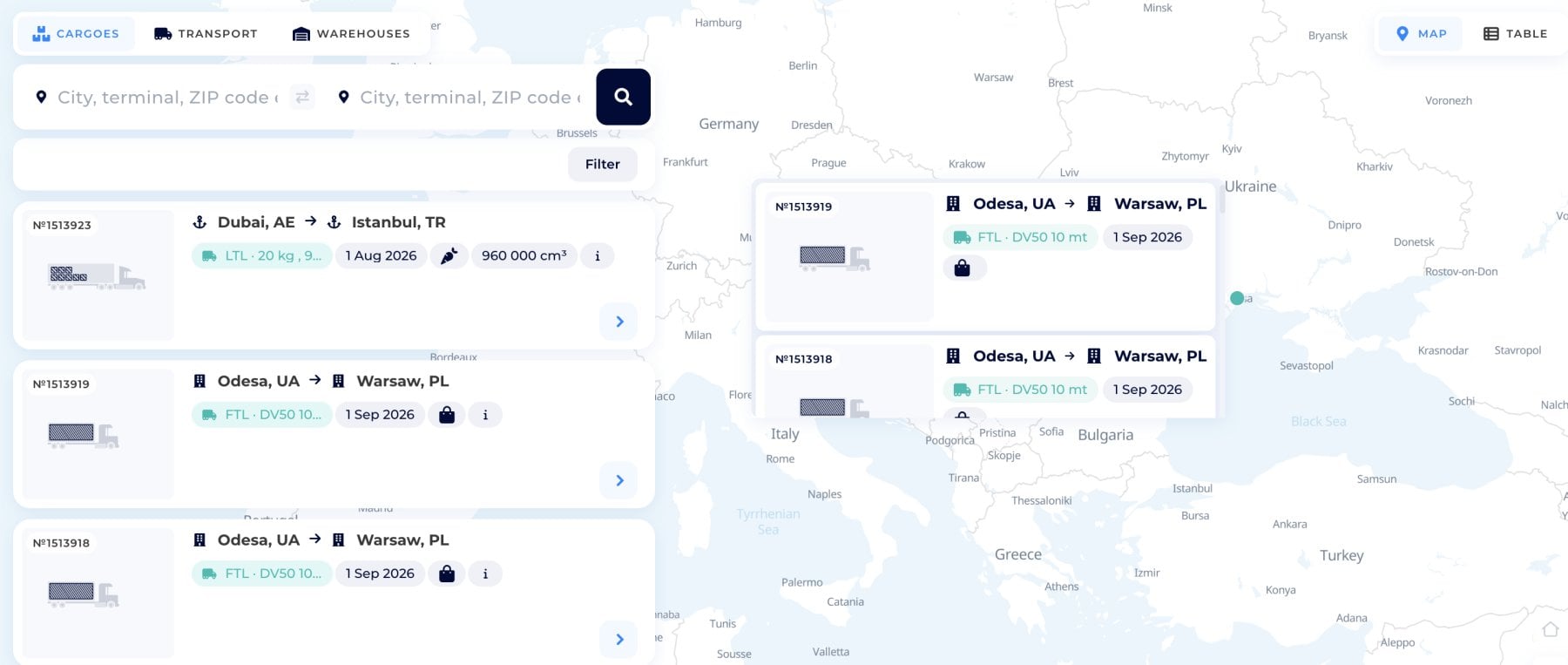
Cargo requests appear as cards on the left and as points or routes on the map. Once opened, a request shows the full route line, cargo summary, and available actions.
For shippers: place cargo and collect the best offers
Carrying out a one-off shipment or scaling regular land trade? Reliable partners and customized rates are the key to both.
With LandRates Cargoes, there is no need to send the same request manually to every carrier. Place your cargo request once, and let relevant providers find it, quote it, and compete for the shipment.
A cargo request can include:
- origin and destination;
- ready-to-load date;
- shipping type;
- cargo weight and volume;
- product category;
- extra services;
- route details;
- special requirements.
The more details you provide, the more accurate offers you can receive.
How cargo requests appear on the map
Each request card shows the essentials before you open the full details:
- request number;
- loading and discharge points;
- shipping type;
- ready-to-load date;
- product category;
- weight or volume;
- service icons;
- request country;
- action button.
For example, a request can show Dubai, AE → Istanbul, TR with LTL cargo, readiness date, product type, weight, and volume. Another request can show Odesa, UA → Warsaw, PL with FTL shipping and personal cargo.
The map also displays request locations and route lines, so users can evaluate cargo opportunities by geography, not only by list data.
Search requests by route
Use the search fields at the top of the Cargoes tab:
- From: city, terminal, or ZIP code
- To: city, terminal, or ZIP code
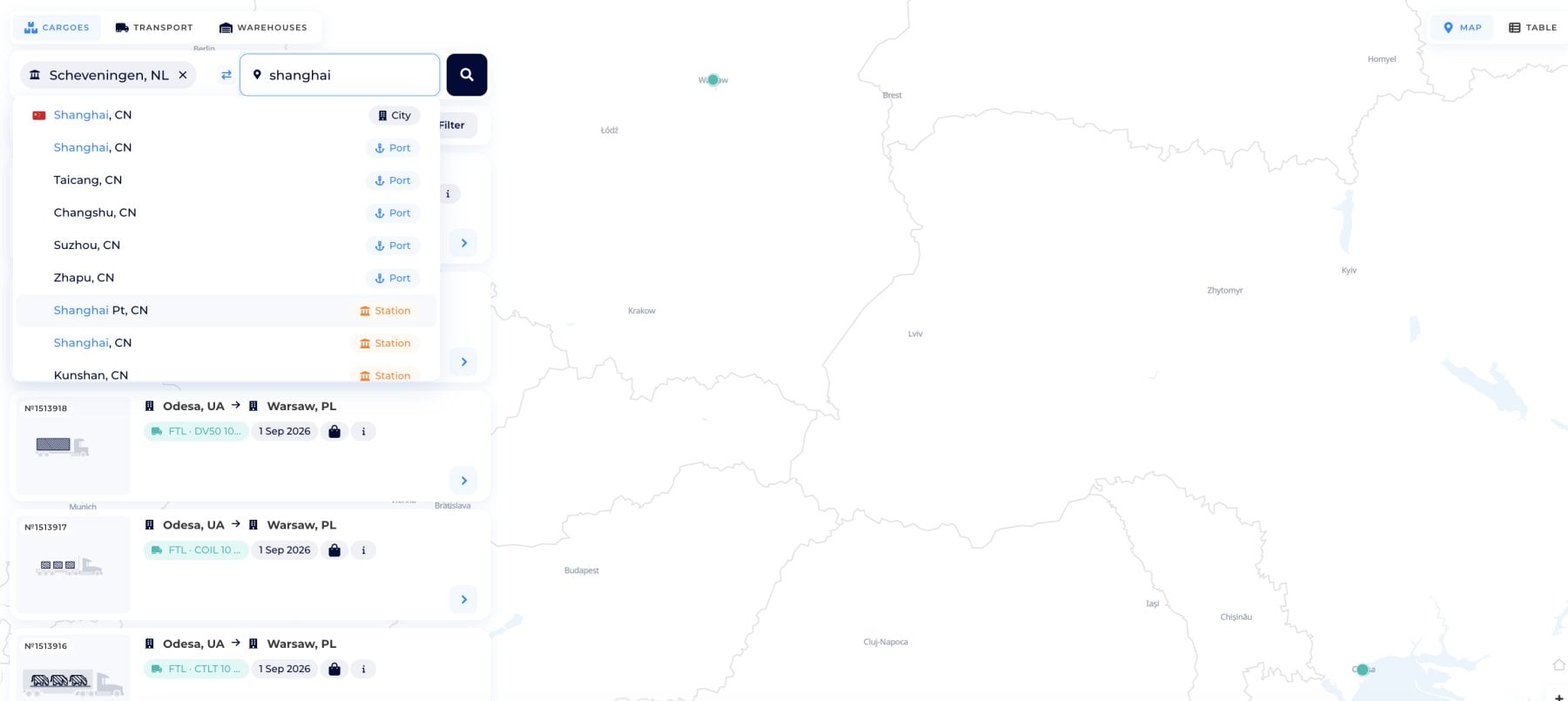
The switch icon between the fields changes the route direction. Click the search button, and the map updates with matching cargo requests.
This is useful when the route is the main factor — for example, when a shipper needs to monitor a lane or when a carrier wants cargo on a specific backhaul.
Use filters to narrow cargo requests
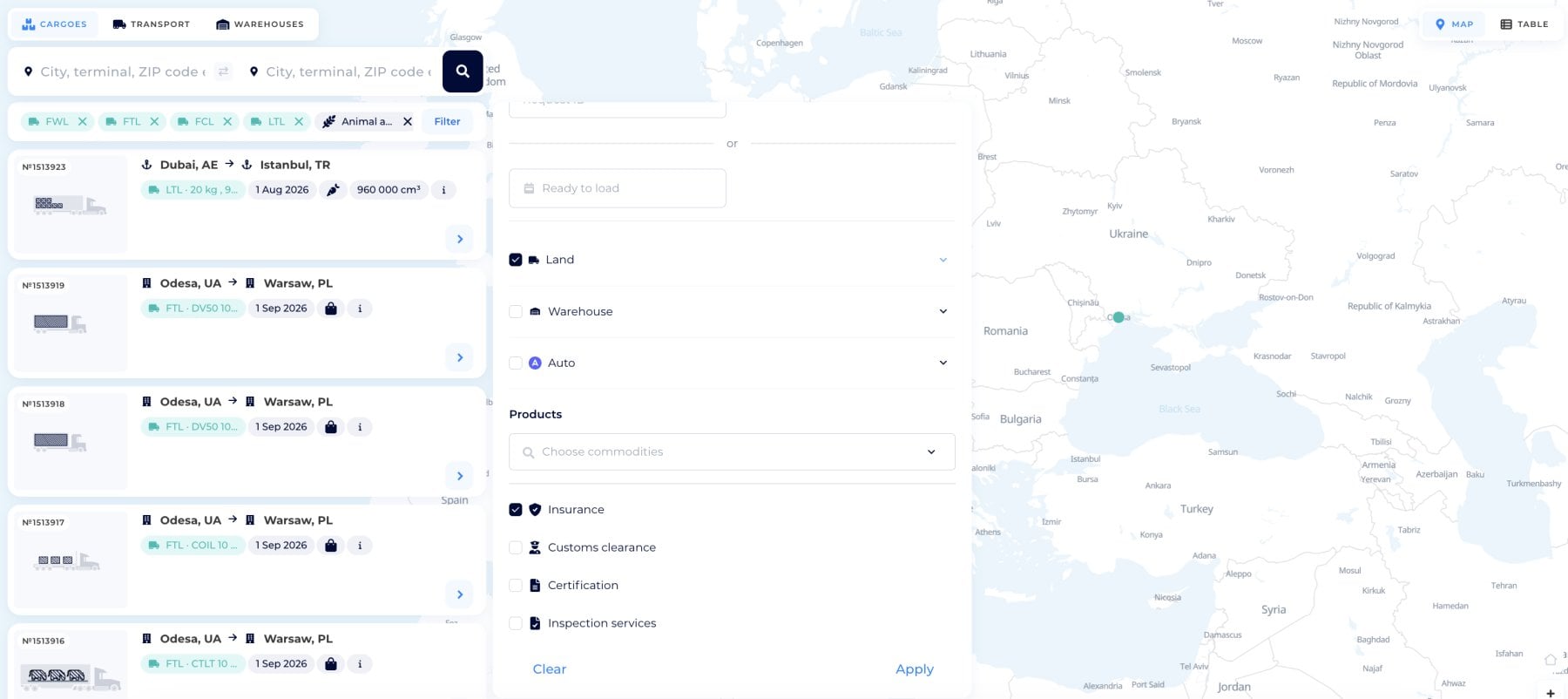
Click Filter to search with more precision.
You can filter requests by:
- origin radius;
- destination radius;
- country;
- request ID;
- ready-to-load date;
- transport mode;
- shipping type;
- warehouse-related options;
- product category;
- additional services;
- expired requests;
- your own requests.
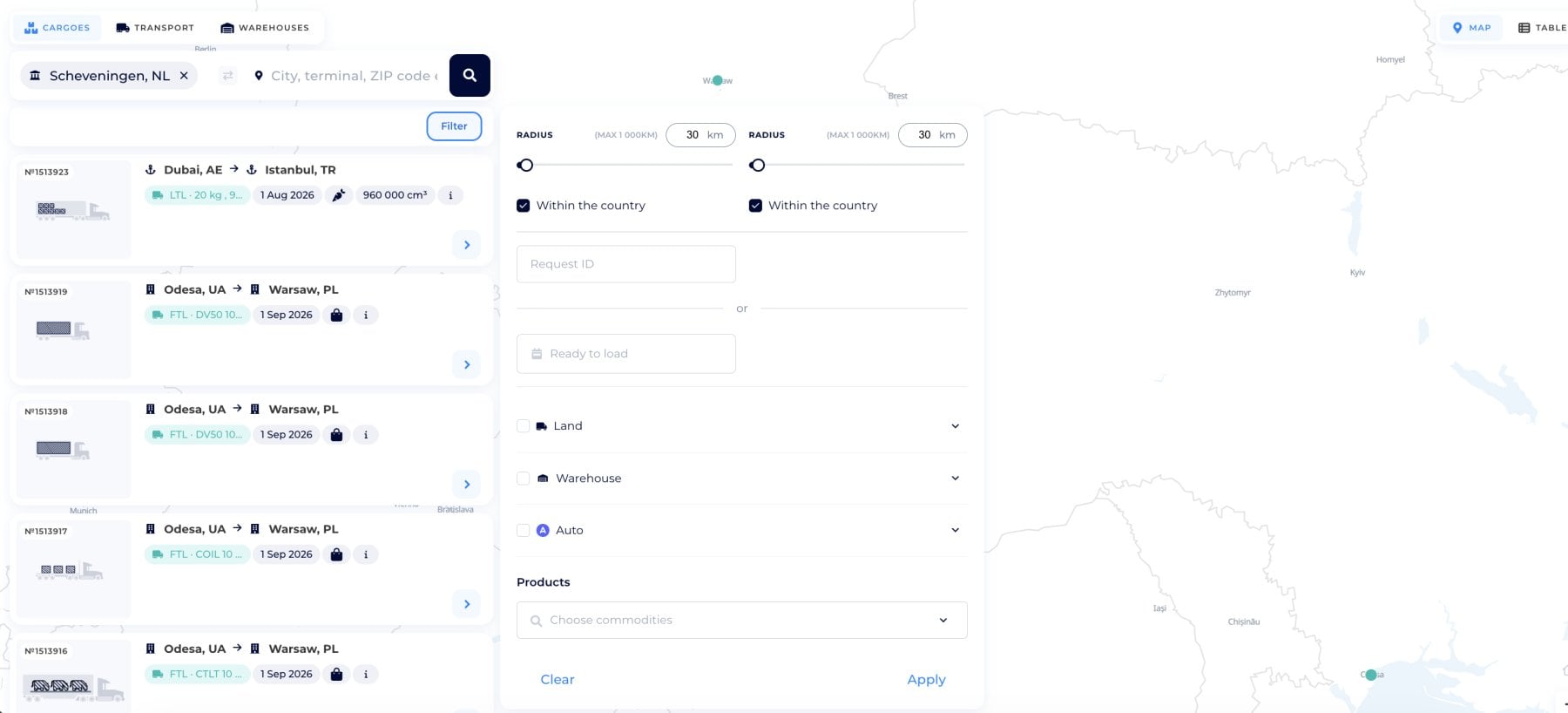
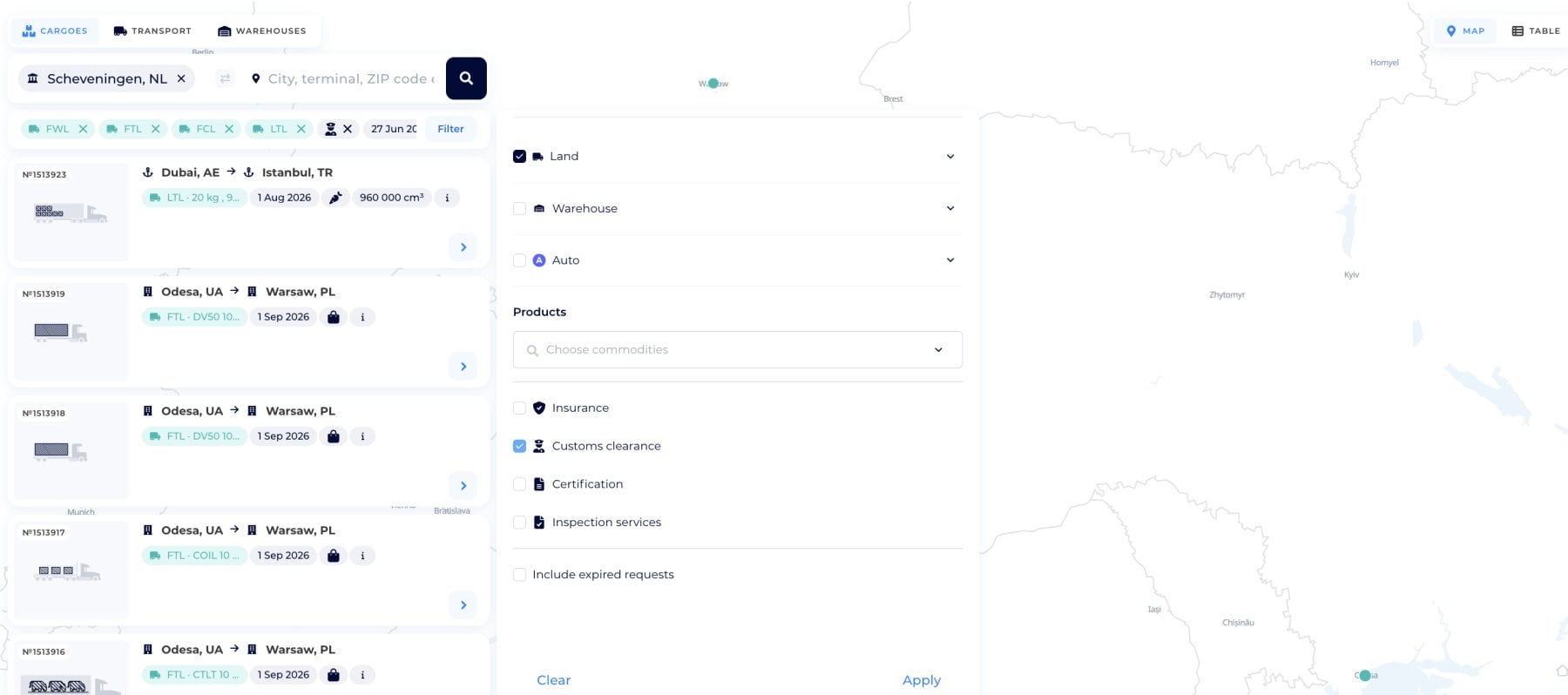
Selected filters appear as chips under the search bar. Remove any chip to adjust the list instantly.
Use Clear to reset filters and Apply to update results.
Shipping types for land logistics
The Cargoes tab supports key land shipping types:
- FWL — Full wagon load
For rail shipments using a full wagon.
- FTL — Full truck load
For cargo that requires a full truck.
- FCL — Full container load
For containerized cargo moving as a full container.
- LTL — Less truck load
For cargo that does not require the full truck capacity.
This lets shippers describe their request correctly and helps carriers find only those cargoes that fit their equipment and capacity.
Product and service filters
Cargoes can be filtered by commodity category. The product list includes more cargo types than shown in the interface preview and may cover categories such as personal cargo, animal products, vegetable products, foodstuffs, mineral products, and other commodity groups.
This helps providers focus on cargoes they can actually handle.
Additional service filters include:
- Insurance;
- Customs clearance;
- Certification;
- Inspection services.
These filters are especially useful when the shipment needs more than transportation. A provider can immediately see which requests require added logistics support.
View available offers through Logistics Explorer
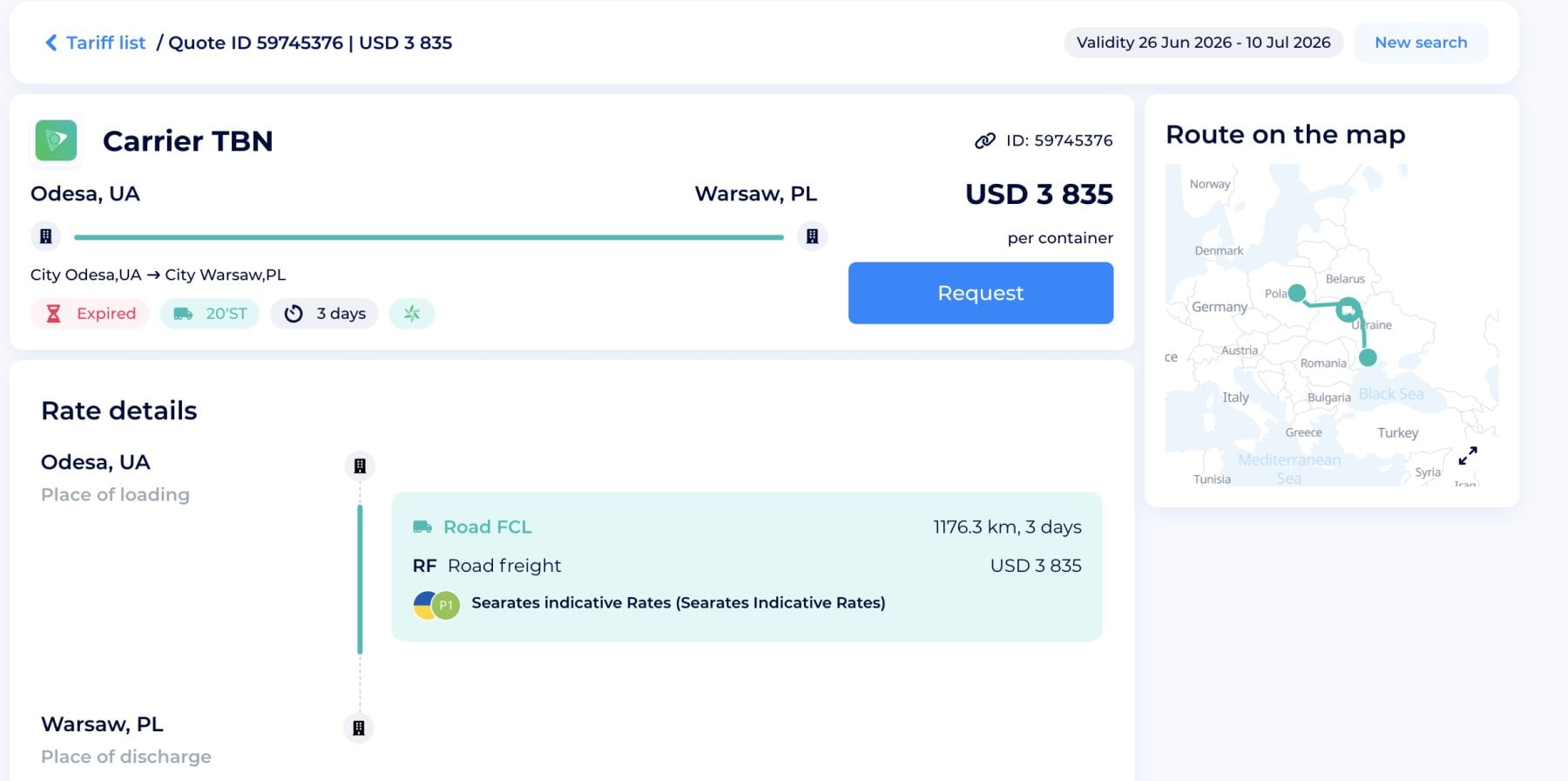
For shippers, the View available offers button connects the cargo request with Logistics Explorer.
This means the user can go from a cargo request on the map to available rates for the same route.
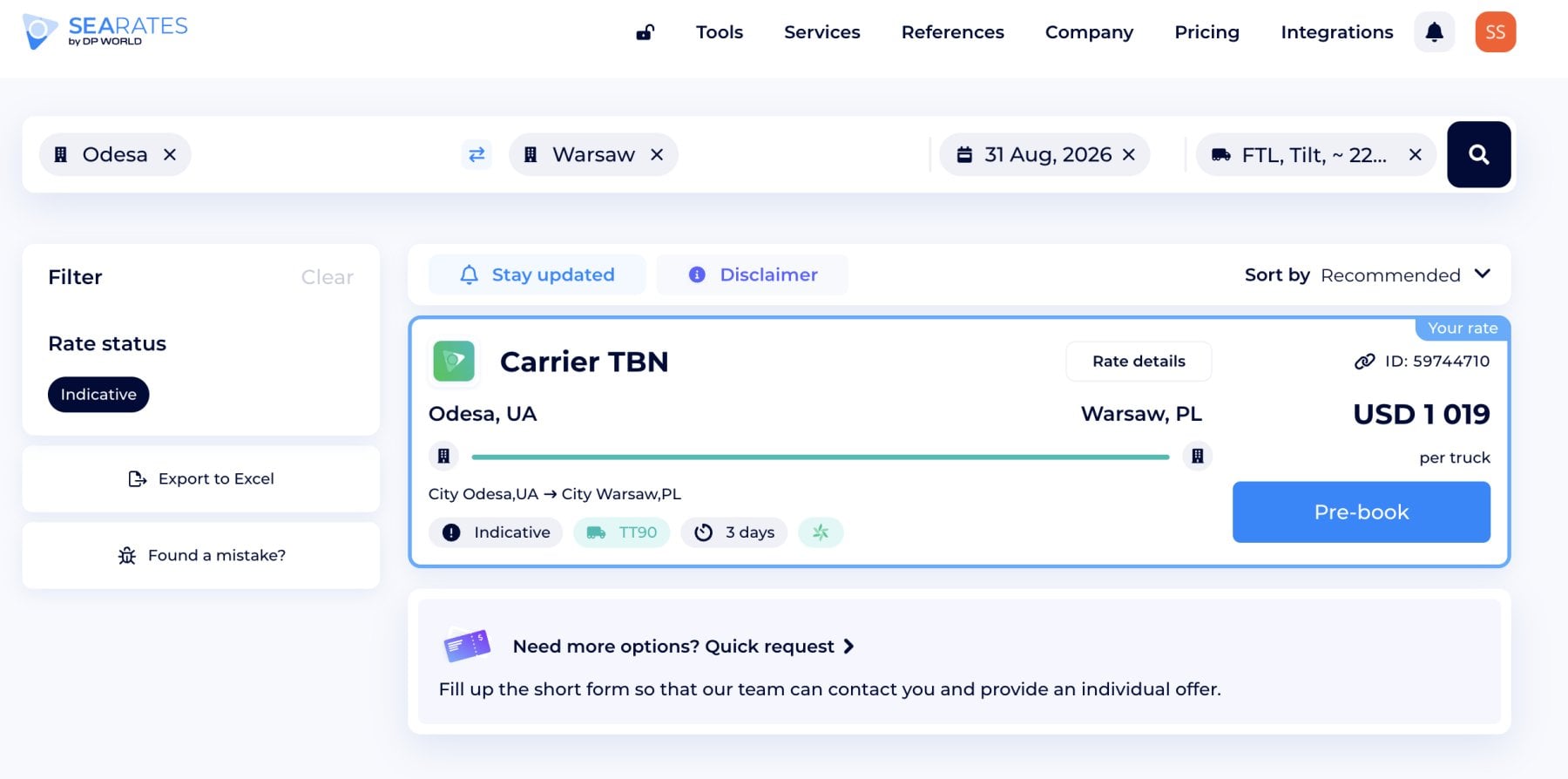
Inside Logistics Explorer, the user can compare offers, check rate details, review transit time, and continue with the booking flow.
This keeps the process connected: request, market visibility, available rates, comparison, and booking.
Copy request link
The Copy button copies the link to the selected cargo request.
Use it to share the request with customers, carriers, procurement teams, or operations teams.
What’s in the result for shippers?
Shippers get a faster way to gather tailored offers from providers. Instead of waiting for separate replies in different channels, they can manage cargo visibility, compare options, and move from request to available rates in one workflow.
This way, you turn your transportation needs into structured requests that providers can quote in real time.
For carriers, freight forwarders, and 3PLs: find cargo leads and quote them
For carriers, freight forwarders, and logistics providers, the Cargoes tab works as a lead generator.
You get access to live shipper requests with route, date, shipping type, cargo category, weight, volume, and service requirements.
Need to fill empty capacity? Looking for profitable backhauls? Want to quote cargoes on a specific lane? Open Cargoes and start from the map, route search, or filters.
Find cargoes that match your capacity
Search by route, zoom into a region, or filter requests by:
- ready-to-load date;
- FWL, FTL, FCL, or LTL;
- product category;
- additional services;
- origin and destination radius;
- request ID.
Request cards help you decide quickly. You can see whether the cargo fits your route, equipment, timing, and service capability before opening the full details.
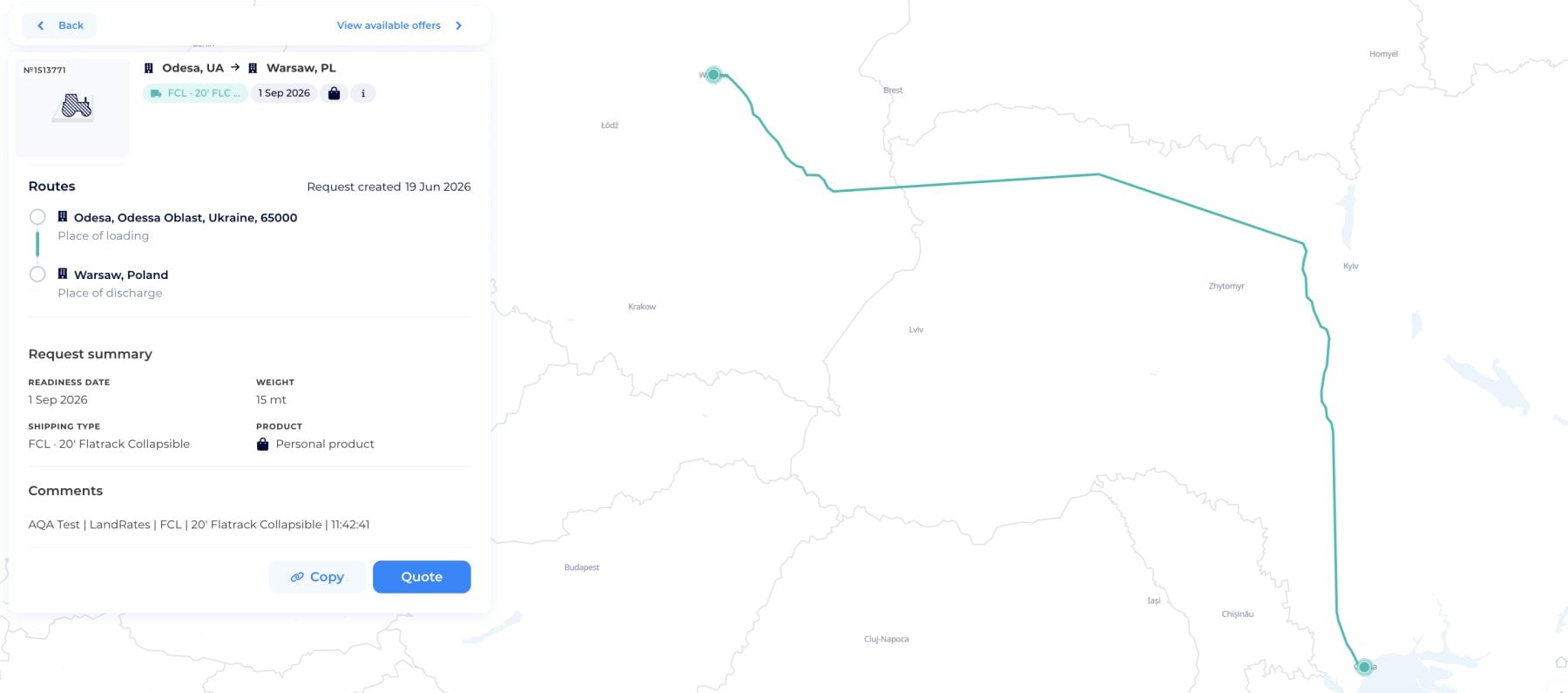
Open request details
When a carrier opens a cargo request, the card shows all provided shipment information:
- route;
- loading and discharge points;
- request creation date;
- readiness date;
- shipping type;
- weight;
- product;
- extra details.
- The map shows the route line visually.
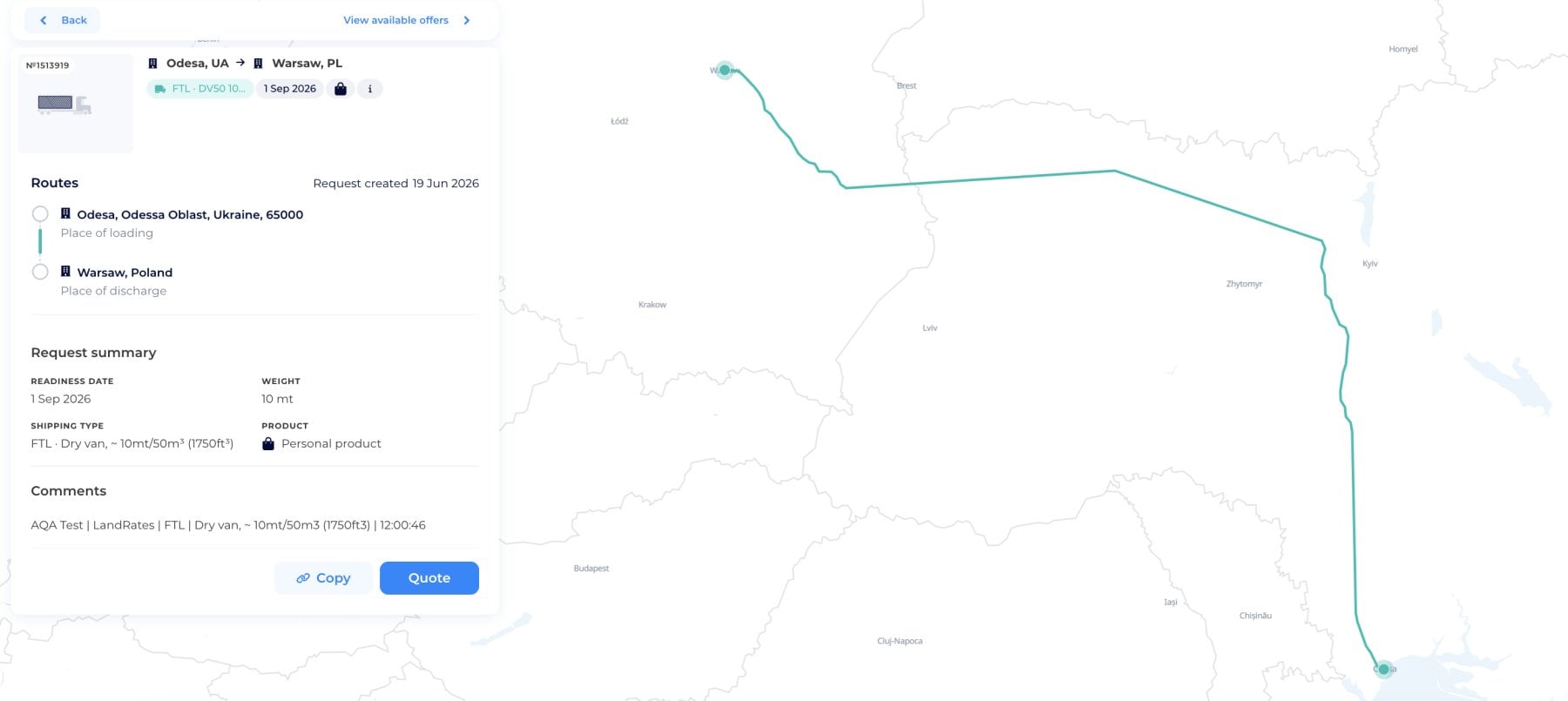
If the request fits your capacity, you can continue with Quote.
Quote a cargo request
For carrier/provider accounts, the request card includes the Quote button.
Click Quote, and the request is transferred to your Virtual Office for further quotation management.
There, the provider can prepare an Individual structural quote with:
- transportation type;
- carrier;
- transit time;
- road freight;
- DOC fee;
- commission;
- validity dates;
- tariff name;
- terms;
- total shipment amount;
- profit settings;
- quote visibility;
- offer details.
The provider can work with a breakdown or lump sum structure, check available rates, and send the offer directly from the Virtual Office.
This turns a map lead into an operational quotation without losing request context.
Available rates and offer management
Inside the provider workspace, the request can be managed together with available rates.
Providers can search tariffs, sort rates, check request status, and prepare a competitive offer. If no available rates are shown, the provider can still build an individual quote manually.
This is useful when a request requires a customized solution, special route conditions, or a carrier-specific price.
What’s in the result for carriers and providers?
Carriers and logistics providers reduce manual searching and turn idle capacity into a sales pipeline. Instead of waiting for random inquiries, they can find cargoes that already match their preferred route, transport mode, and timing.
One click on Quote moves the request into the Virtual Office, where the provider can build, manage, and send the offer professionally.
Web integration
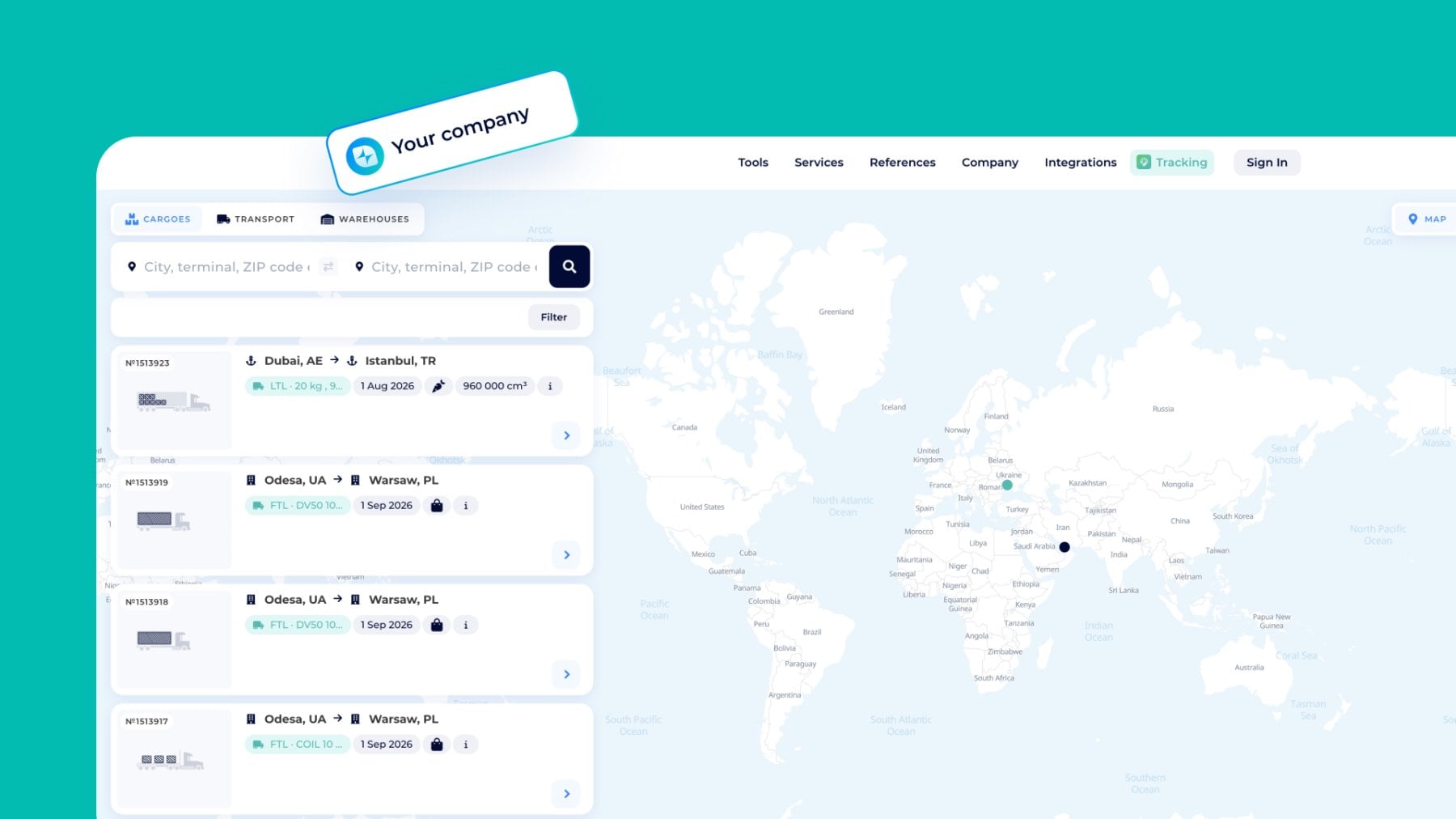
Extra advantages are available with the integration of the Logistics Map into your own website.
A white-labeled Cargoes module can help shippers create their own tender platform, while carriers and forwarders can use it as a branded lead generation map. It supports cargo request visibility, route-based search, customer-facing request boards, and provider quotation workflows.
Explore documentation and request the integration demo from our team.
API connection
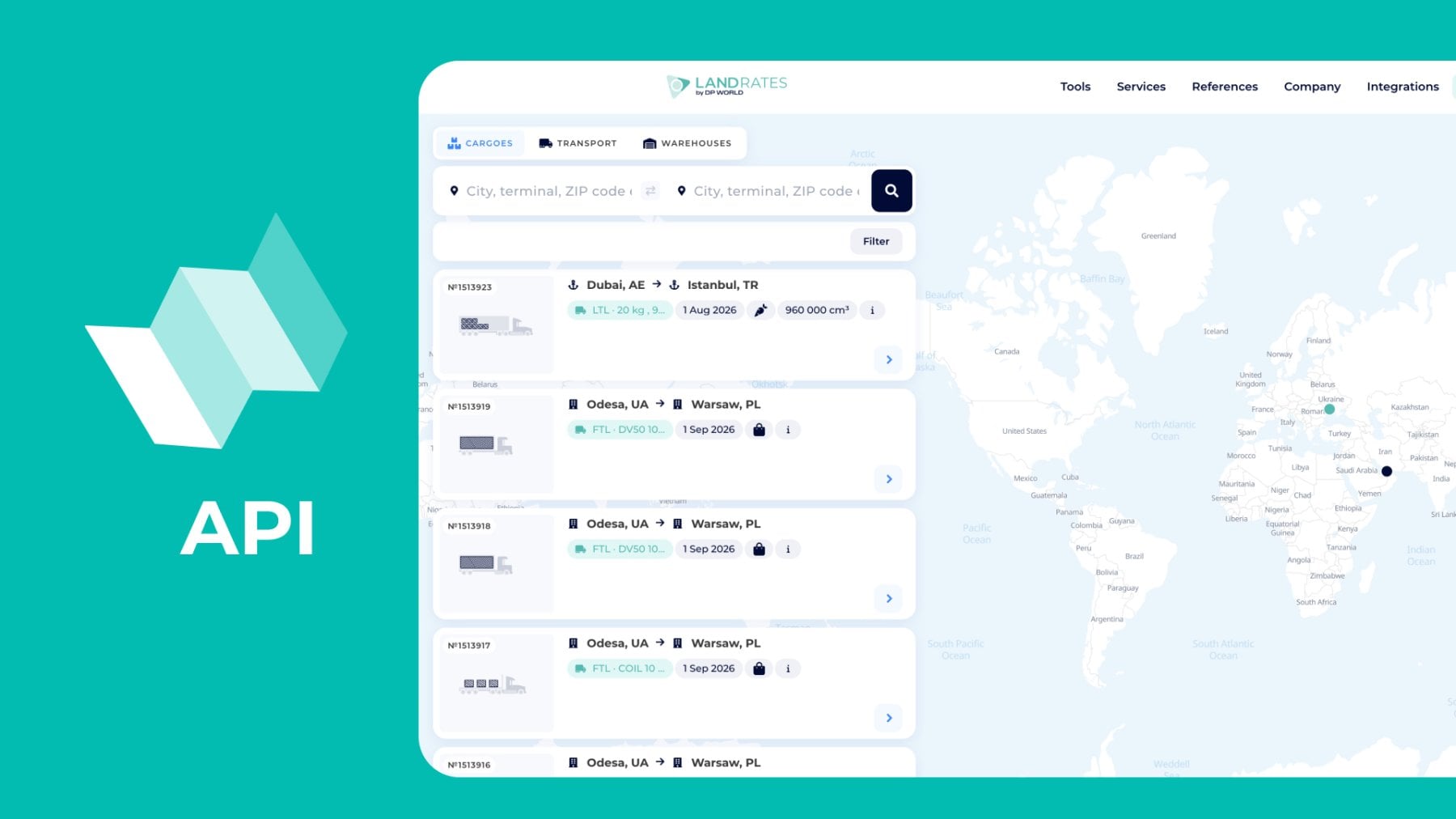
With the API connection, companies can automate the cargo request and quotation process. The Cargoes flow can be connected with internal systems such as ERP, CRM, TMS, pricing engines, or custom dashboards via the Logistics Map API.
Possible use cases include:
- shipping request upload;
- cargo lead synchronization;
- request filtering by route, product, or service;
- transport capacity matching;
- dynamic pricing;
- tender management;
- provider quotation workflow;
- automated routing of leads to operation teams.
The process works in both directions: shippers advertise cargo requests, while carriers and providers discover matching leads and quote them faster.
For advanced access and custom integrations, reach out to us at it.sales@searates.com. Stay tuned for further guides about the Logistics Map for the "Transport" and "Warehouses".